Abstract
Herbo-mineral formulations prepared through the classical Ayurvedic discipline of Rasashastra — incorporating processed metals and minerals such as purified mercury, sulphur, and various bhasmas — have long been valued for their reported potency in chronic and degenerative conditions, but continue to attract regulatory scrutiny over heavy-metal content and standardized manufacturing practice. This review examines current pharmaceutical standards governing the preparation, purification (shodhana), and incineration (marana) processes central to Rasashastra manufacturing, alongside heavy-metal testing protocols mandated by AYUSH regulatory frameworks and international pharmacopoeial limits. The review further evaluates published toxicological and clinical-safety literature on select Rasashastra preparations, identifies gaps in standardized testing infrastructure across manufacturing units, and proposes a framework for strengthening quality assurance, batch consistency, and pharmacovigilance reporting to support the continued safe integration of these preparations into allopathic-adjacent clinical care.
- Rasashastra
- Herbo-Mineral Medicine
- Bhasma
- Ayurvedic Pharmaceutics
- Heavy Metal Safety
- AYUSH Regulation
- Pharmacovigilance
- Quality Assurance
Introduction#
The internet has become an essential part of modern life. People use digital technologies for communication, education, banking, shopping, entertainment, healthcare, government services, business, and social networking. With the rapid expansion of smartphones, social media, online payments, cloud services, and digital platforms, internet use has increased among people of all age groups. This digital growth has created many opportunities, but it has also increased the risk of cyber threats and irresponsible online behaviour. Cybersecurity awareness is one of the most important requirements of the digital age. It refers to the knowledge and understanding of online risks and the ability to protect oneself from cyber threats. Internet users may face various risks such as phishing emails, fake websites, hacking, malware, ransomware, identity theft, financial fraud, cyberstalking, password theft, data breaches, and privacy violations. Many users become victims of cybercrime because they lack proper awareness about safe online practices. Safe internet use requires basic cybersecurity habits. These include creating strong passwords, changing passwords regularly, using two-factor authentication, avoiding unknown links, not sharing OTPs or personal details, installing updates, using antivirus protection, checking website authenticity, and being careful while making online payments. Cybersecurity awareness helps users identify risks and take preventive action before harm occurs. Digital citizenship is another important concept in the online world. It means responsible, ethical, respectful, and informed participation in digital spaces. A good digital citizen uses technology in a safe and lawful manner, respects the rights and privacy of others, communicates politely, avoids spreading false information, and follows digital rules and responsibilities. Digital citizenship is not only about technical skills but also about values, behaviour, and social responsibility.
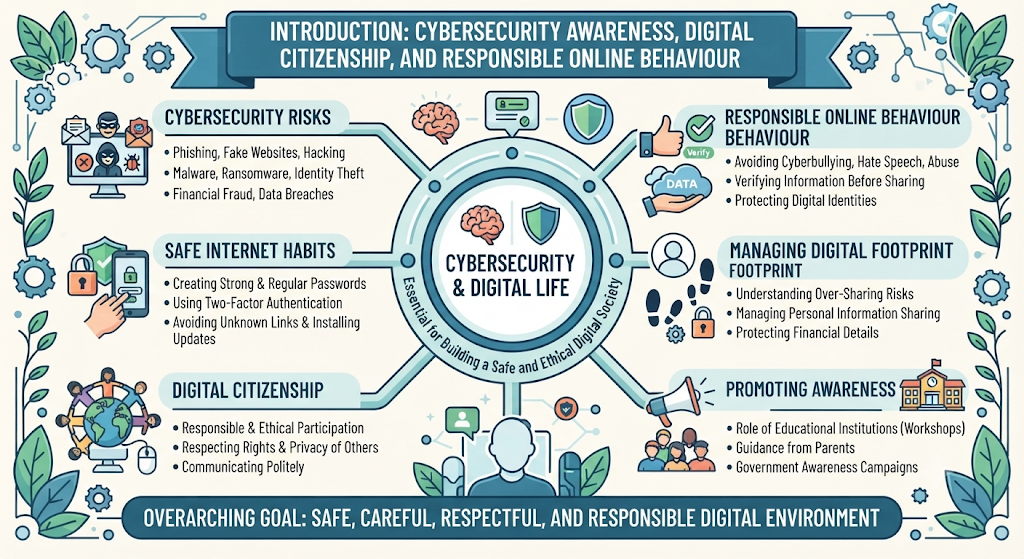
Responsible online behaviour includes many aspects of digital life. Internet users should avoid cyberbullying, hate speech, online abuse, plagiarism, piracy, misinformation, and misuse of personal data. They should respect others’ opinions, verify information before sharing, protect digital identities, and use online platforms for constructive purposes. In a connected world, one person’s online behaviour can affect many others; therefore, responsibility is essential. The need for cybersecurity awareness and digital citizenship has increased due to the growth of social media and online communication. People often share personal photos, locations, opinions, financial details, and private information online without understanding the risks. Fake news, scams, online harassment, and privacy violations are common challenges. Therefore, internet users must learn how to manage their digital footprint and protect themselves from misuse. Students, professionals, parents, elderly users, business owners, and general citizens all need cybersecurity awareness. Young users may face risks such as cyberbullying, online gaming scams, harmful content, and over-sharing of personal information. Adults may face financial fraud, phishing, data theft, and workplace cybersecurity issues. Elderly users may be more vulnerable to fake calls, digital payment fraud, and online deception. Thus, awareness must be developed across all user groups. Educational institutions have an important role in promoting cybersecurity awareness and digital citizenship. Schools, colleges, and universities should conduct workshops, awareness campaigns, practical training sessions, and digital literacy programmes. Parents should guide children about safe internet use. Government agencies and cybercrime cells should promote public awareness about reporting mechanisms and preventive measures. The present study is significant because it explores how internet users understand and practice safe and ethical online behaviour. It focuses on the relationship between awareness, attitude, and actual online practices. The study may help identify gaps in cybersecurity knowledge and responsible digital behaviour. The cybersecurity awareness, digital citizenship, and responsible online behaviour are essential for building a safe and ethical digital society. As internet use continues to grow, users must become more aware, careful, respectful, and responsible in the digital environment.
Cybersecurity Awareness among Internet Users#
Cybersecurity awareness refers to the knowledge and understanding of online risks and the ability to use digital platforms safely. In the present digital era, internet users depend on online services for communication, banking, education, shopping, entertainment, healthcare, official work, and social networking. This increasing dependence has made cybersecurity awareness very important for every internet user.
Cyber threats include phishing, hacking, malware, ransomware, identity theft, cyber fraud, fake websites, password stealing, OTP fraud, data leakage, and privacy violation. Many users become victims of cybercrime because they do not understand these risks properly. For example, clicking on unknown links, sharing OTPs, using weak passwords, downloading unknown files, and trusting fake messages can expose users to cyber attacks.
Cybersecurity awareness helps users protect their personal and financial information. Internet users should create strong passwords, avoid using the same password for many accounts, enable two-factor authentication, update mobile phones and computers regularly, and avoid sharing personal details on unknown websites. They should also be careful while using public Wi-Fi, online payment apps, social media accounts, and email services.
Awareness is especially important because cybercriminals often use psychological tricks to cheat users. They may send fake messages about lottery prizes, bank account problems, job offers, discounts, parcel delivery, or urgent verification. Users who are not aware may believe such messages and share sensitive information. Therefore, cybersecurity awareness teaches users to verify before trusting any online message.
Different age groups face different types of cyber risks. Students may face gaming scams, cyberbullying, fake profiles, and harmful online content. Working professionals may face email phishing, data theft, and office-related cyber threats. Elderly users may be targeted through fake calls, digital payment fraud, and misleading messages. Therefore, cybersecurity awareness should be developed among all categories of internet users.
Educational institutions, government agencies, banks, and digital platforms should conduct regular awareness programmes. Simple training on password safety, cyber fraud prevention, privacy settings, safe browsing, and complaint reporting can reduce cybercrime risks. Awareness should be practical and easy to understand so that common users can apply it in daily life.
Thus, cybersecurity awareness is the first step toward safe internet use. It empowers users to identify online threats, protect digital identity, prevent financial loss, and use technology confidently.
Digital Citizenship and Ethical Use of Technology#
Digital citizenship means responsible, ethical, respectful, and safe participation in the digital world. It refers to how people behave while using the internet, social media, online communities, digital services, and communication platforms. A good digital citizen understands both rights and responsibilities in the online environment.
Digital citizenship includes many important values such as respect, honesty, privacy, responsibility, empathy, fairness, and legal behaviour. Internet users should respect the opinions, identity, and dignity of others. They should avoid cyberbullying, hate speech, abusive comments, trolling, harassment, and spreading false information. Online communication should be polite, responsible, and constructive.
One important aspect of digital citizenship is digital rights and responsibilities. Every internet user has the right to access information, express opinions, learn online, and participate in digital society. At the same time, users have the responsibility to follow cyber laws, respect copyright, protect privacy, and avoid misuse of digital platforms. Freedom of expression should not be used to harm others.
Digital citizenship also includes respect for intellectual property. Users should not copy content, images, videos, books, software, or research materials without permission or proper acknowledgement. Plagiarism, piracy, and illegal downloading are unethical digital practices. Responsible users should give credit to original creators and use digital content legally.
Privacy is another major part of digital citizenship. Internet users should protect their own personal information and also respect the privacy of others. Sharing someone’s photo, phone number, address, private message, or personal information without consent is irresponsible behaviour. A good digital citizen understands that online actions can affect real lives.
Digital citizenship is also connected with information responsibility. In the age of social media, fake news and misinformation spread very quickly. Users should verify information before sharing it. They should check the source, date, authenticity, and reliability of any message, video, or news item. Sharing false information can create confusion, fear, hatred, or social tension.
Educational institutions have an important role in developing digital citizenship. Students should be taught how to behave responsibly online, communicate respectfully, avoid cyberbullying, identify misinformation, and protect privacy. Parents should also guide children in safe and ethical internet use.
Thus, digital citizenship is essential for building a healthy digital society. It encourages internet users to use technology not only safely but also ethically, respectfully, and responsibly.
Responsible Online Behaviour and Digital Safety Practices#
Responsible online behaviour refers to the careful, ethical, and disciplined use of internet services. It includes safe browsing, respectful communication, privacy protection, responsible sharing, secure transactions, and awareness of online consequences. In today’s world, online behaviour directly affects personal safety, social relationships, reputation, and digital identity.
One major part of responsible online behaviour is protecting personal information. Internet users should not share sensitive details such as passwords, OTPs, bank details, Aadhaar details, personal photos, address, or location with unknown people or websites. Oversharing on social media may create risks such as identity theft, stalking, fraud, and misuse of personal data.
Responsible users should also maintain strong security habits. They should use strong passwords, enable two-factor authentication, update apps and devices, avoid unknown downloads, use secure websites, and log out from shared devices. They should not click on suspicious links or respond to unknown messages asking for personal details. These habits reduce the chances of cyber attacks.
Online communication is another important area. Users should communicate politely and respectfully. They should avoid abusive language, insults, threats, hate speech, cyberbullying, and spreading rumours. The internet should be used for learning, cooperation, creativity, and meaningful communication rather than harmful behaviour.
Responsible online behaviour also includes checking information before sharing. Many people forward messages, news, videos, and posts without verification. This can spread misinformation and create social problems. Internet users should confirm facts from reliable sources before forwarding any content.
Digital footprint is also important. Every online activity leaves a trace. Comments, photos, searches, posts, likes, and shared content can affect future opportunities, reputation, and relationships. Users should think carefully before posting anything online. Once content is uploaded, it may be difficult to remove completely.
Responsible online behaviour is especially important for young users. Children and youth may not fully understand the risks of online gaming, social media friendships, public profiles, and private chatting. They should be guided about safe communication, privacy settings, reporting harmful content, and avoiding interaction with unknown users.
Institutions and families should encourage responsible digital habits. Awareness campaigns, workshops, digital safety rules, cyber helplines, and counselling can help users develop safer behaviour. Responsible online behaviour is not only an individual need but also a social responsibility.
Thus, responsible online behaviour helps protect users from cyber threats, maintains respectful digital relationships, and promotes a safe online environment.
Challenges and Measures for Promoting Cybersecurity Awareness and Digital Responsibility#
Although internet use is increasing rapidly, cybersecurity awareness and digital responsibility are still limited among many users. One major challenge is lack of digital literacy. Many users know how to use mobile phones, social media, and payment apps, but they do not know how to protect themselves from cyber risks. They may not understand phishing, malware, privacy settings, fake links, or secure passwords.
Another challenge is overconfidence and careless behaviour. Some users believe that cybercrime will not happen to them. As a result, they use weak passwords, ignore security updates, click unknown links, and share personal information online. This careless attitude increases vulnerability to cyber attacks.
Cyber fraud is also becoming more advanced. Fraudsters use fake calls, fake customer care numbers, fake bank messages, fake job offers, fake shopping websites, and fake social media profiles to cheat users. Many victims hesitate to report cybercrime due to shame, fear, lack of knowledge, or confusion about complaint procedures.
Misinformation and fake news are also serious challenges. Digital platforms allow fast sharing of content, but many users do not verify information. This can lead to panic, hatred, social conflict, and wrong decision-making. Lack of media literacy and fact-checking habits makes the problem worse.
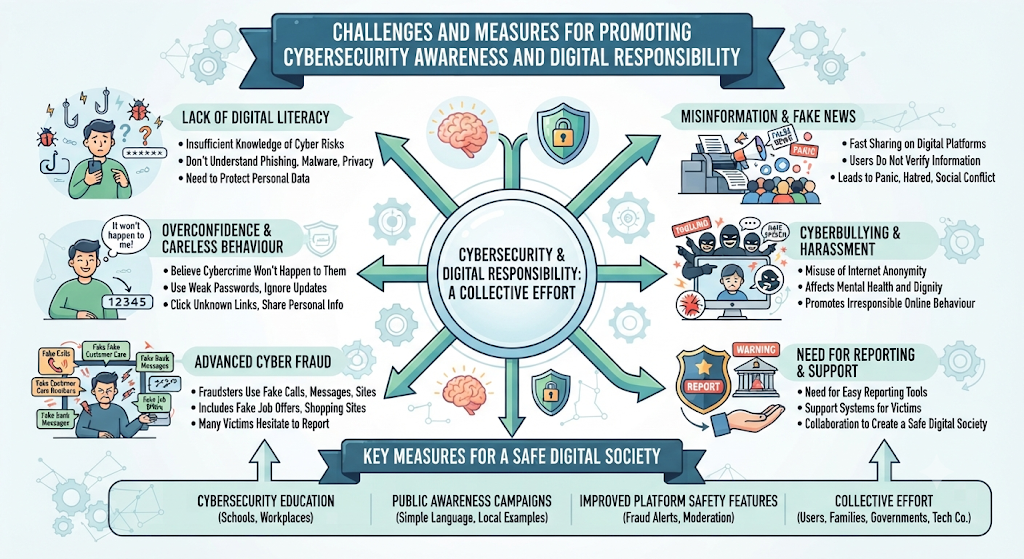
Cyberbullying, online harassment, trolling, and hate speech are additional concerns. Many users misuse the anonymity of the internet to harm others. Such behaviour affects mental health, dignity, and social harmony. Therefore, responsible online behaviour must be promoted along with cybersecurity awareness.
To address these challenges, cybersecurity education should be made part of school, college, and workplace training. Users should be taught simple and practical safety practices such as strong passwords, two-factor authentication, safe payment habits, privacy protection, and cybercrime reporting.
Government agencies, banks, police departments, NGOs, and digital platforms should conduct public awareness campaigns. Messages should be available in local languages and should use simple examples from daily life. Cyber safety information should reach rural users, elderly persons, students, women, professionals, and small business owners.
Digital platforms should also improve safety features. Easy reporting tools, privacy settings, fraud alerts, content moderation, and user education can help reduce online risks. Banks and payment apps should regularly warn users not to share OTPs, PINs, and passwords. The promoting cybersecurity awareness and digital responsibility requires collective effort. Users, families, schools, governments, banks, and technology companies must work together to create a safe, ethical, and responsible digital society.
Conclusion#
The study concludes that cybersecurity awareness, digital citizenship, and responsible online behaviour are essential for safe and ethical internet use. As internet users increasingly depend on digital platforms for education, banking, communication, shopping, entertainment, and professional work, the risks of cybercrime, privacy violation, misinformation, and online harassment have also increased.
Cybersecurity awareness helps users identify online threats such as phishing, hacking, malware, OTP fraud, fake links, identity theft, and financial scams. Digital citizenship develops responsible values such as respect, privacy, honesty, lawful behaviour, and ethical communication. Responsible online behaviour encourages users to protect personal information, verify information before sharing, avoid cyberbullying, use strong passwords, and follow safe digital practices.
The study also highlights that many internet users still lack proper knowledge of cyber safety and digital responsibility. Therefore, awareness programmes, digital literacy training, cyber safety workshops, school and college-level education, public campaigns, and simple reporting systems are necessary. Overall, developing cybersecurity awareness and responsible digital citizenship can help create a safer, respectful, and trustworthy online society.
Works Cited#
- Anderson, Janna, and Lee Rainie. The Future of Well-Being in a Tech-Saturated World. Pew Research Center, 2018.
- Choi, Moonsun. “A Concept Analysis of Digital Citizenship for Democratic Citizenship Education in the Internet Age.” Theory & Research in Social Education, vol. 44, no. 4, 2016, pp. 565–607.
- Chou, Chien, and Linda Condron. “Cyberbullying: Impacts and Prevention Strategies.” Journal of School Violence, vol. 10, no. 1, 2011, pp. 1–15.
- Furnell, Steven. Cybercrime: Vandalizing the Information Society. Addison-Wesley, 2002.
- Hadnagy, Christopher. Social Engineering: The Science of Human Hacking. 2nd ed., Wiley, 2018.
- Hinduja, Sameer, and Justin W. Patchin. Bullying Beyond the Schoolyard: Preventing and Responding to Cyberbullying. 2nd ed., Corwin, 2015.
- International Telecommunication Union. Global Cybersecurity Index 2020. ITU, 2021.
- Jaishankar, K. Cyber Criminology: Exploring Internet Crimes and Criminal Behavior. CRC Press, 2011.
- Jones, Lisa M., Kimberly J. Mitchell, and David Finkelhor. “Trends in Youth Internet Victimization.” Journal of Adolescent Health, vol. 50, no. 2, 2012, pp. 179–186.
- Livingstone, Sonia, and Leslie Haddon, editors. Children, Risk and Safety on the Internet. Policy Press, 2009.
- Mossberger, Karen, Caroline J. Tolbert, and Ramona S. McNeal. Digital Citizenship: The Internet, Society, and Participation. MIT Press, 2008.
- National Cyber Security Centre. Cyber Security: Small Business Guide. NCSC, 2023.
- Ribble, Mike. Digital Citizenship in Schools: Nine Elements All Students Should Know. 3rd ed., International Society for Technology in Education, 2015.
- Schneier, Bruce. Secrets and Lies: Digital Security in a Networked World. Wiley, 2000.
- Singer, Peter W., and Allan Friedman. Cybersecurity and Cyberwar: What Everyone Needs to Know. Oxford University Press, 2014.
- Smith, Peter K., et al. “Cyberbullying: Its Nature and Impact in Secondary School Pupils.” Journal of Child Psychology and Psychiatry, vol. 49, no. 4, 2008, pp. 376–385.
- Solove, Daniel J. Understanding Privacy. Harvard University Press, 2008.
- Symantec. Internet Security Threat Report. Symantec Corporation, 2019.
- United Nations Office on Drugs and Crime. Comprehensive Study on Cybercrime. United Nations, 2013.
- Whitman, Michael E., and Herbert J. Mattord. Principles of Information Security. 6th ed., Cengage Learning, 2018.