Abstract
Regimenal therapy (Ilaj bil Tadbeer), encompassing procedures such as hijama (cupping), dalk (massage), and takmeed (fomentation), represents a distinctive non-pharmacological treatment modality within the Unani system of medicine, widely used for musculoskeletal pain conditions including lower back pain, cervical spondylosis, and joint stiffness. This clinical evaluation assesses reported pain reduction, functional mobility outcomes, and patient-reported quality-of-life measures following a structured course of regimenal therapy, and compares these outcomes against standard allopathic physiotherapy and analgesic management for equivalent presenting complaints. The evaluation further discusses procedural standardization, practitioner training requirements, and safety considerations for regimenal therapy delivery, with the aim of informing integrative pain-management protocols within multidisciplinary allopathic and traditional-medicine clinical settings.
- Unani Medicine
- Ilaj bil Tadbeer
- Regimenal Therapy
- Hijama
- Musculoskeletal Pain
- Integrative Pain Management
- Clinical Evaluation
Introduction#
Media plays a central role in modern democratic societies. It acts as a bridge between citizens, government, political institutions, public issues, and democratic processes. Through newspapers, television, radio, digital news platforms, social media, podcasts, and online discussions, citizens receive information about elections, political parties, public policies, social problems, government schemes, rights, duties, and national developments. In this way, media performs an important function in shaping public opinion and political understanding.
Young voters are one of the most important groups in a democracy. They represent new political energy, fresh opinions, social change, and future leadership. When young voters are politically aware and civically active, they can strengthen democratic institutions and encourage responsible governance. Political awareness means knowledge of political systems, elections, rights, duties, parties, policies, leaders, current affairs, and public issues. A politically aware young voter is more likely to make informed electoral choices and participate responsibly in democratic life.
In the present digital era, media exposure among young voters has increased greatly. Many young people receive political information through social media platforms, video-sharing websites, online news portals, messaging applications, and digital campaigns. Research with young people has found that social media is now a key source of political information, while schools, family, television, and internet sources also shape political knowledge and confidence.
Media exposure can positively influence political awareness. News reports, debates, interviews, election campaigns, policy discussions, and civic education content help young voters understand political issues. Through media, young people can learn about voting procedures, election dates, candidate profiles, party manifestos, social justice issues, environmental concerns, unemployment, education, healthcare, corruption, gender equality, and constitutional values. This information may help them develop political interest and critical thinking.
Media also influences civic participation. Civic participation refers to the active involvement of citizens in democratic and social life. It includes voting, attending public meetings, participating in debates, signing petitions, volunteering, joining awareness campaigns, discussing public issues, and raising community problems. Digital platforms have created new spaces for youth participation through online campaigns, political discussions, issue-based movements, and public expression. Studies on youth political information habits show that digital and social platforms play a major role in how young people learn about elections and issues.
Democratic values are another important aspect of young voters’ development. Democracy is not limited to voting; it also requires respect for equality, justice, liberty, tolerance, diversity, dialogue, accountability, and rule of law. Media can strengthen democratic values by exposing young voters to different viewpoints, public debates, social problems, human rights issues, and constitutional principles. Responsible media can encourage youth to respect pluralism, question injustice, and participate peacefully in democratic processes.
However, media exposure may also have negative effects. The growth of digital media has increased the spread of misinformation, fake news, political propaganda, hate speech, paid news, and biased content. Young voters may be influenced by emotional appeals, manipulated videos, false claims, and algorithm-based echo chambers. The 2026 Youth Tracker by the UK Electoral Commission noted that many young people encounter political information through social media but trust it less than schools, family, and traditional media; it also reported concern about fake political information.
Therefore, media literacy is very important. Young voters should be able to identify reliable sources, verify facts, compare viewpoints, understand bias, and avoid sharing false information. Media exposure becomes beneficial only when young voters use media critically and responsibly. Without media literacy, exposure to political content may create confusion, polarization, or distrust in democratic institutions.
The present study is significant because it examines the influence of media exposure on three important dimensions: political awareness, civic participation, and democratic values among young voters. It helps in understanding whether media is creating informed and responsible citizens or whether certain media patterns are creating misinformation and passive political behaviour. The study may provide useful suggestions for schools, colleges, election commissions, youth organizations, media institutions, and policymakers to strengthen democratic education and responsible media use among young voters.
Media Exposure and Political Awareness among Young Voters#
Media exposure plays an important role in developing political awareness among young voters. Political awareness means knowledge and understanding of political institutions, election procedures, political parties, government policies, public issues, rights, duties, and constitutional values. Young voters are often at the beginning stage of their political life, and media becomes a major source through which they learn about democracy and governance.
Traditional media such as newspapers, television, radio, and magazines provide information about elections, parliamentary debates, government decisions, public welfare schemes, political speeches, and national issues. These sources help young voters understand the formal structure of politics. Television debates and newspaper editorials can develop political interest and help youth compare different viewpoints.
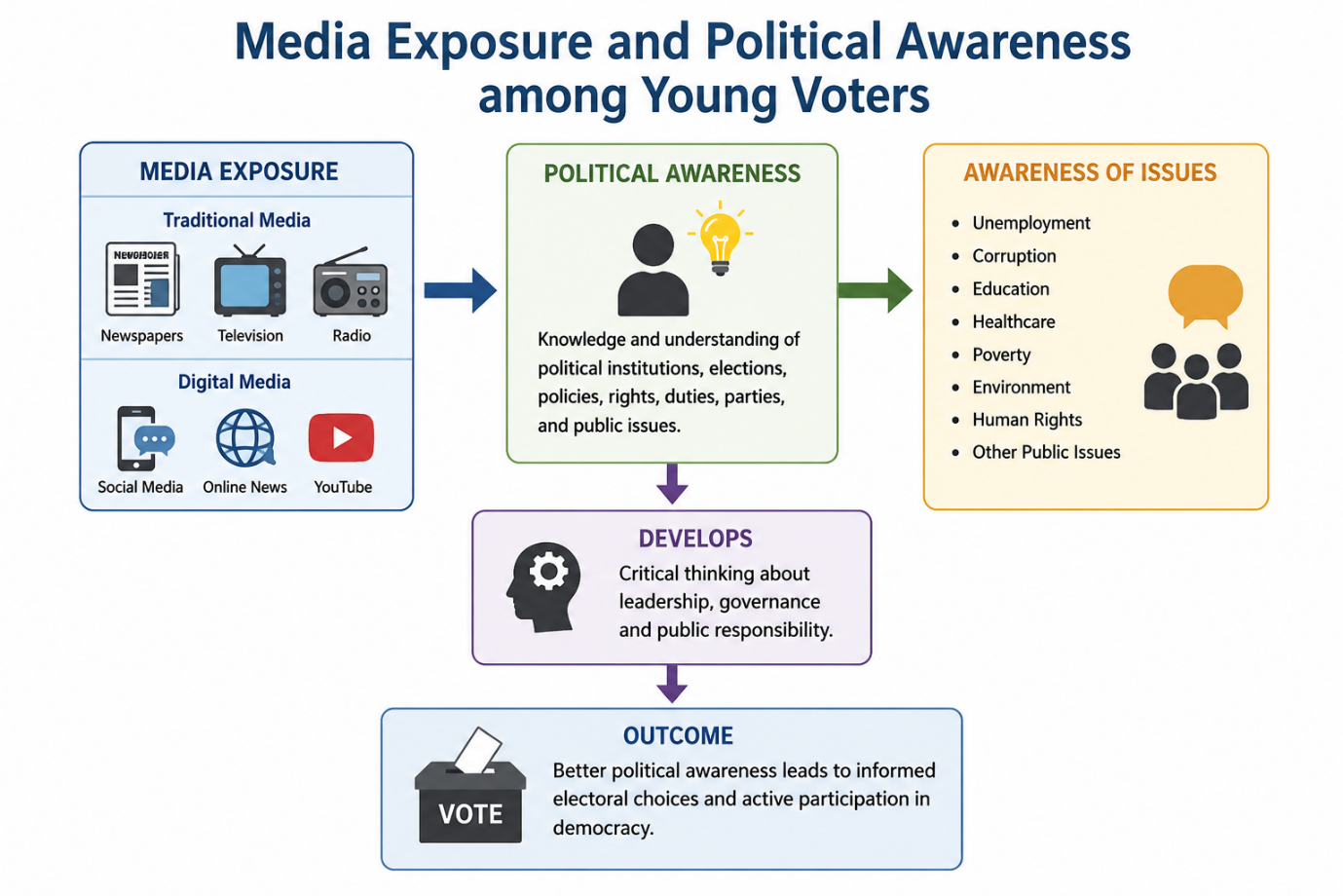 Digital media has further expanded political awareness. Social media platforms, online news portals, podcasts, YouTube discussions, and messaging applications provide instant political information. Young voters can easily access election updates, candidate profiles, party manifestos, policy discussions, and public opinion. Digital platforms also allow young people to follow political leaders, journalists, activists, and civic organizations directly.
Media exposure helps young voters become aware of social and political problems such as unemployment, corruption, education, healthcare, gender equality, environmental protection, poverty, and human rights. When young voters are exposed to such issues, they may develop a better understanding of the connection between politics and daily life. This awareness can motivate them to think critically about leadership, governance, and public responsibility.
However, political awareness depends on the quality of media content. If young voters consume reliable, balanced, and factual information, their political understanding improves. But if they are exposed to fake news, biased content, propaganda, or emotional misinformation, their awareness may become distorted. Therefore, media exposure must be supported by critical thinking and media literacy.
In conclusion, media exposure can strongly influence political awareness among young voters. It provides political knowledge, develops interest in public affairs, and helps youth understand democratic processes. Responsible media use can prepare young voters to make informed electoral choices and participate meaningfully in democracy.
Role of Traditional and Digital Media in Civic Participation#
Civic participation refers to the active involvement of citizens in social, political, and community life. It includes voting, discussing public issues, attending meetings, participating in campaigns, volunteering, signing petitions, joining awareness drives, and raising local problems. Among young voters, civic participation is very important because youth energy can strengthen democracy and social change.
Traditional media has historically encouraged civic participation by informing citizens about elections, voting dates, public policies, government schemes, and social issues. Newspapers and television channels report on public problems and create awareness about democratic responsibilities. Radio programmes, public service announcements, and election-related campaigns also encourage citizens to vote and participate in community activities.
Digital media has created new forms of civic participation. Young voters can now express opinions, share political content, join online discussions, support social causes, participate in digital campaigns, and mobilize others through social media. Online petitions, awareness hashtags, youth forums, and digital movements allow young people to participate even without physical presence. This has made civic engagement faster and more accessible.
Media also helps young voters connect with political leaders, institutions, civil society groups, and public movements. Through digital platforms, youth can raise complaints, demand accountability, ask questions, and discuss public issues. This creates a sense of involvement and gives young people a voice in democratic processes.
Civic participation is not limited to elections. Media exposure can motivate young voters to participate in cleanliness drives, environmental campaigns, blood donation camps, gender equality movements, anti-drug campaigns, road safety awareness, and educational initiatives. Thus, media can transform young voters from passive observers into active citizens.
However, digital civic participation also has limitations. Sometimes young people may only like, share, or comment online without real participation. This is called symbolic or passive participation. Online platforms may also promote anger, polarization, and misinformation. Therefore, civic participation should be meaningful, responsible, and based on verified information.
In conclusion, both traditional and digital media play an important role in promoting civic participation among young voters. Media informs, motivates, connects, and mobilizes youth. When used responsibly, it can encourage voting, public engagement, social responsibility, and democratic participation.
Media Influence on Democratic Values and Responsible Citizenship#
Democratic values are the foundation of a healthy democracy. These values include equality, liberty, justice, tolerance, freedom of expression, secularism, respect for diversity, rule of law, accountability, and participation. Young voters must understand and practice these values because they are future citizens, leaders, and decision-makers.
Media plays a major role in spreading democratic values. Through news, debates, documentaries, interviews, public discussions, and social campaigns, media informs young voters about rights, duties, laws, social justice, and constitutional principles. Media exposes youth to different communities, opinions, problems, and viewpoints. This helps them understand diversity and develop tolerance.
Responsible media encourages young voters to question injustice, corruption, discrimination, and misuse of power. It promotes transparency by reporting government actions and public concerns. When young voters see media questioning authority and highlighting people’s issues, they learn the importance of accountability in democracy.
Media also supports freedom of expression. Young voters can express opinions, debate public issues, and participate in democratic dialogue through digital platforms. This gives them confidence and encourages active citizenship. Social media has especially provided young people with a space to raise concerns, support causes, and discuss democratic rights.
Democratic values are strengthened when media promotes balanced discussion, factual reporting, peaceful debate, and respect for differences. When young voters are exposed to multiple viewpoints, they learn that democracy requires dialogue and disagreement without hatred. This helps build responsible citizenship.
However, media can also weaken democratic values if it spreads hate speech, misinformation, communal bias, sensationalism, or political propaganda. Biased media may create intolerance, division, and distrust. Young voters may develop extreme views if they are exposed only to one-sided content. Therefore, media literacy is necessary to protect democratic values.
Responsible citizenship requires awareness, participation, tolerance, and critical thinking. Media can develop these qualities among young voters if it provides truthful information and encourages democratic behaviour. Schools, colleges, families, and media institutions should guide young voters to use media responsibly. Thus, media has a strong influence on democratic values and responsible citizenship. It can develop informed, tolerant, active, and responsible young citizens. But this positive influence depends on the quality of media content and the critical ability of young voters.
Challenges of Misinformation, Bias, and Need for Media Literacy#
Although media exposure can increase political awareness and civic participation, it also creates serious challenges for young voters. In the digital era, political information spreads very quickly through social media, messaging applications, video platforms, blogs, and online news portals. Not all information is accurate or reliable. Fake news, misinformation, propaganda, hate speech, edited videos, paid content, and biased reporting can mislead young voters.
Misinformation is one of the biggest challenges. False political messages may spread during elections to influence voting behaviour. Young voters may believe such information if it is presented emotionally or shared by friends, family members, or popular online personalities. Fake news can create confusion, fear, anger, and distrust among voters.
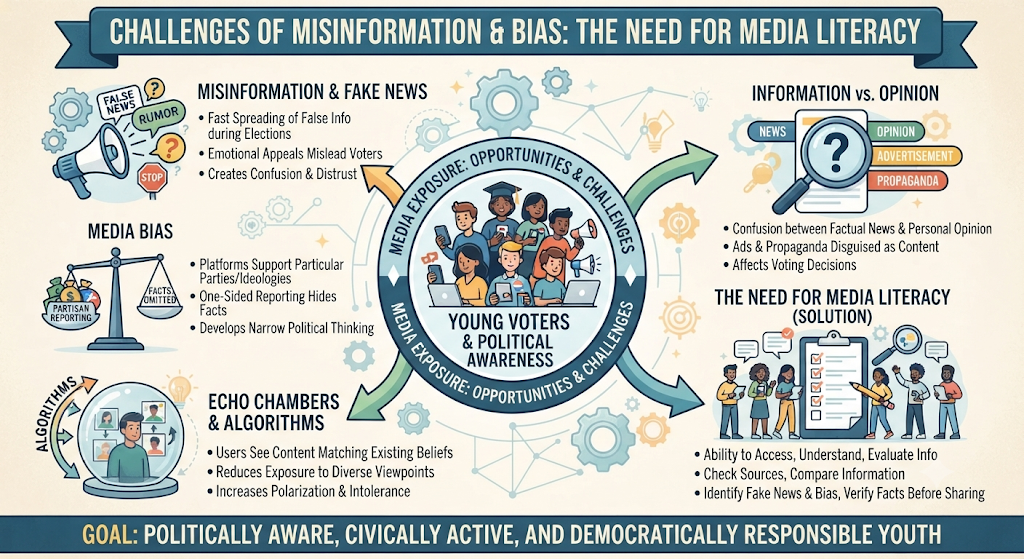
Media bias is another important issue. Some media platforms may support particular political parties, ideologies, or interest groups. Biased reporting may hide important facts or present only one side of an issue. When young voters repeatedly consume biased content, they may develop narrow political thinking and lose the ability to evaluate issues objectively.
Social media algorithms also create echo chambers. An echo chamber means a situation where users mostly see content that matches their existing beliefs. This reduces exposure to different viewpoints and may increase polarization. Young voters may become less tolerant of opposing opinions, which is harmful for democratic values.
Another challenge is the difference between information and opinion. Many young voters may not clearly understand whether a post, video, or article is factual news, personal opinion, advertisement, or propaganda. This confusion can affect political awareness and voting decisions.
Therefore, media literacy is essential. Media literacy means the ability to access, understand, evaluate, verify, and responsibly use media content. Young voters should learn how to check sources, compare information, identify fake news, understand bias, avoid emotional manipulation, and verify facts before sharing content.
Schools and colleges should include media literacy and political literacy programmes. Election authorities, teachers, parents, civil society organizations, and media platforms should work together to educate young voters. Workshops, awareness campaigns, fact-checking exercises, and responsible social media training can help youth become informed digital citizens.
In conclusion, misinformation, bias, propaganda, and lack of media literacy are major challenges in the political development of young voters. Media can strengthen democracy only when young voters use it critically and responsibly. Therefore, media literacy is necessary for building politically aware, civically active, and democratically responsible youth.
Conclusion#
The study concludes that media exposure has a significant influence on political awareness, civic participation, and democratic values among young voters. Media provides information about elections, political parties, government policies, public issues, rights, duties, and constitutional values. Through newspapers, television, radio, online news portals, and social media platforms, young voters become more aware of political and social developments.
Media also encourages civic participation by motivating young voters to vote, discuss public issues, participate in campaigns, raise community concerns, and engage in democratic activities. Digital media has especially created new opportunities for youth to express opinions, join awareness movements, and connect with public institutions.
The study further concludes that media can strengthen democratic values such as equality, freedom of expression, tolerance, justice, accountability, secularism, and respect for diversity. However, misinformation, fake news, media bias, political propaganda, hate speech, and echo chambers may negatively affect young voters’ political understanding and democratic behaviour.
Therefore, media literacy is essential for young voters. They should be able to identify reliable information, verify facts, understand bias, and use media responsibly. Overall, responsible media exposure can help young voters become informed, active, and responsible citizens in a democratic society.
Works Cited#
- Almond, Gabriel A., and Sidney Verba. The Civic Culture: Political Attitudes and Democracy in Five Nations. Princeton University Press, 1963.
- Bennett, W. Lance. “Changing Citizenship in the Digital Age.” Civic Life Online: Learning How Digital Media Can Engage Youth, edited by W. Lance Bennett, MIT Press, 2008, pp. 1–24.
- Buckingham, David. Media Education: Literacy, Learning and Contemporary Culture. Polity Press, 2003.
- Castells, Manuel. Communication Power. Oxford University Press, 2009.
- Coleman, Stephen, and Jay G. Blumler. The Internet and Democratic Citizenship: Theory, Practice and Policy. Cambridge University Press, 2009.
- Dahl, Robert A. Democracy and Its Critics. Yale University Press, 1989.
- Dalton, Russell J. The Good Citizen: How a Younger Generation Is Reshaping American Politics. CQ Press, 2008.
- Delli Carpini, Michael X., and Scott Keeter. What Americans Know about Politics and Why It Matters. Yale University Press, 1996.
- Habermas, Jürgen. The Structural Transformation of the Public Sphere. MIT Press, 1989.
- Jenkins, Henry, et al. Confronting the Challenges of Participatory Culture: Media Education for the 21st Century. MIT Press, 2009.
- Kaid, Lynda Lee, and Christina Holtz-Bacha, editors. Encyclopedia of Political Communication. SAGE Publications, 2008.
- Keane, John. The Media and Democracy. Polity Press, 1991.
- McCombs, Maxwell E., and Donald L. Shaw. “The Agenda-Setting Function of Mass Media.” Public Opinion Quarterly, vol. 36, no. 2, 1972, pp. 176–187.
- Norris, Pippa. A Virtuous Circle: Political Communications in Postindustrial Societies. Cambridge University Press, 2000.
- Putnam, Robert D. Bowling Alone: The Collapse and Revival of American Community. Simon & Schuster, 2000.
- Shah, Dhavan V., Nojin Kwak, and R. Lance Holbert. “Connecting and Disconnecting with Civic Life: Patterns of Internet Use and the Production of Social Capital.” Political Communication, vol. 18, no. 2, 2001, pp. 141–162.
- Strömbäck, Jesper. “In Search of a Standard: Four Models of Democracy and Their Normative Implications for Journalism.” Journalism Studies, vol. 6, no. 3, 2005, pp. 331–345.